5 Signs of Water Damage in Historic Brookhaven Homes
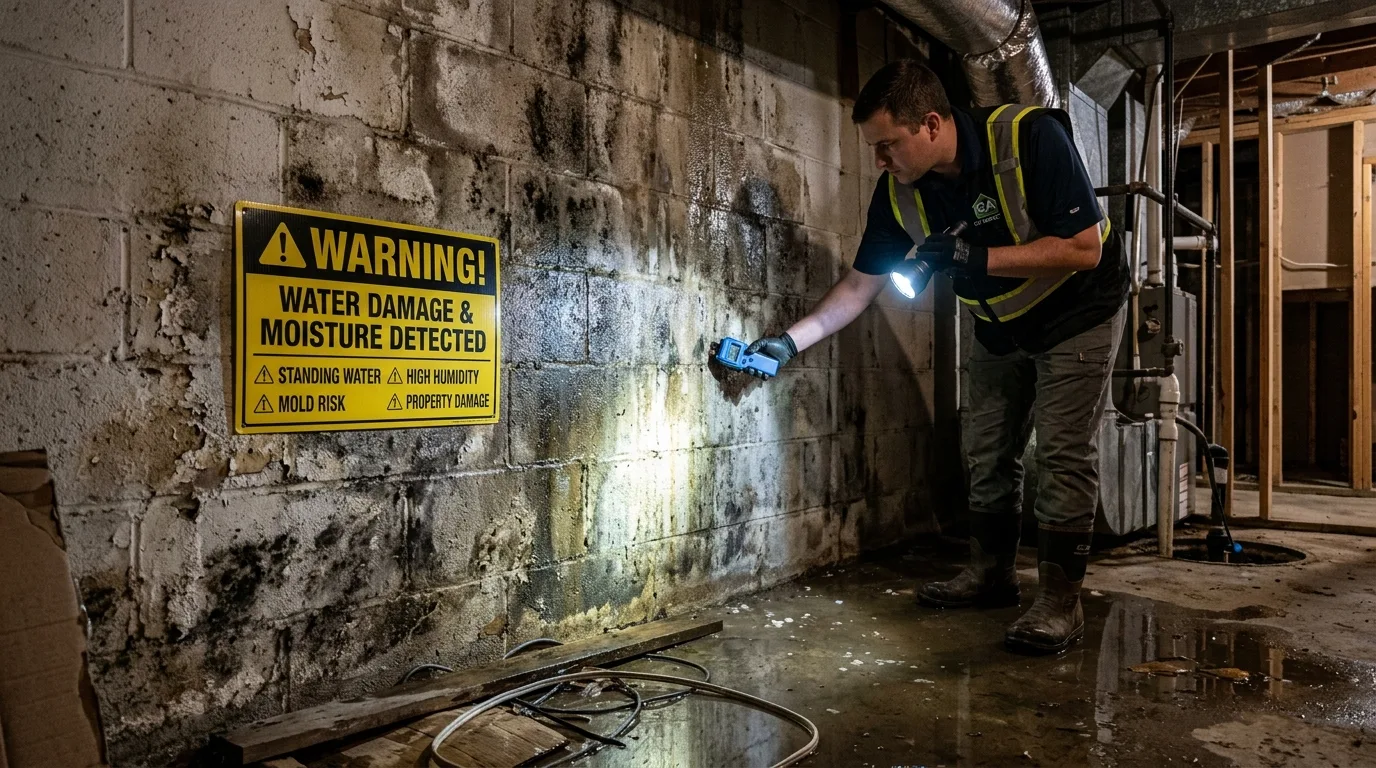
The homes in Historic Brookhaven — particularly the architecturally significant properties near Capital City Country Club with average values above $1.5 million — carry a water damage risk profile that differs meaningfully from newer construction. Plumbing systems installed 60–80 years ago, unventilated crawlspaces built before modern moisture science, and original building envelopes without modern waterproofing membranes create conditions where water damage can be present for months before a homeowner notices anything obvious.
In this post, we cover five specific signs of water damage that Historic Brookhaven homes display, what makes older construction uniquely vulnerable, and what professional water damage restoration involves for these premium properties.
Concerned About Water Damage in Your Brookhaven Home?
Free professional assessment for Historic Brookhaven and all Brookhaven neighborhoods. Call (877) 698-1311.
Why Historic Brookhaven Homes Are Uniquely Vulnerable
Properties in the Historic Brookhaven district were built primarily between 1910 and 1960, when construction standards didn’t include the moisture barriers, drainage systems, and pipe materials that are standard today. Cast iron drain pipes from that era corrode from the inside out — often for a decade or more before the pinhole leaks or joint failures that cause visible water damage. Galvanized steel supply pipes, installed in homes through the 1960s, develop mineral scale buildup and corrosion that restricts flow and eventually causes wall-cavity leaks. Brick and stone masonry foundations common in the neighborhood’s oldest homes are porous in ways that modern poured concrete is not.
The neighborhood’s large lot sizes and mature tree canopies also affect water damage risk. Root systems from established oak and maple trees throughout Historic Brookhaven can infiltrate clay sewer laterals that run from home to municipal connection — causing slow sewer backups that eventually result in black water events if not detected. The premium finishes in these homes — plaster walls, hardwood floors, custom millwork — make water damage both easier to conceal and more expensive to repair when it does become visible.
Sign 1: Staining Patterns That Don’t Match Recent Rain Events
Water staining in plaster or drywall ceilings and walls is common in Brookhaven’s older homes, but the staining pattern matters. Stains that appear during or immediately after rain events point to active roof leaks. Stains that appear days after rain, or that don’t correlate with any weather event, often indicate plumbing leaks within wall cavities — supply lines, drain connections, or HVAC condensate lines.
Brownish ring stains on plaster ceilings in Historic Brookhaven homes are particularly common above bathrooms where cast iron drain connections have developed slow leaks at joints — leaks that drip continuously but not in quantities large enough to trigger visible water accumulation on the floor above. These leaks are discovered when staining appears on the ceiling below, often after months or years of slow saturation have compromised the structural integrity of the floor system above the leak location.
Dehumidification and water extraction remediate the current damage; a licensed plumber replaces the failing pipe. We coordinate with plumbing contractors to address both the restoration and the source repair in a single project sequence.
Sign 2: Musty Odors That Persist After Ventilation
A persistent musty or earthy smell that doesn’t clear with windows open is one of the most reliable indicators of active mold growth in a Brookhaven home — and in Historic Brookhaven properties with unventilated crawlspaces, musty odors almost always originate below the first floor rather than in living spaces directly.
The crawlspaces under many Historic Brookhaven homes were built with dirt floors and minimal ventilation — a design that might have been adequate in drier climates but fails in Georgia’s humid environment. Moisture from the soil evaporates continuously into the crawlspace air, raising relative humidity to levels where mold colonizes floor joists and subfloor sheathing. The affected wood slowly decays, and the musty air infiltrates through subfloor penetrations, electrical chases, and HVAC returns into the living space above.
Crawlspace mold remediation combined with vapor barrier or full encapsulation installation eliminates the moisture source and prevents recurrence. Read our detailed post on crawlspace water damage in Brookhaven for the full process.
Musty Odor in Your Brookhaven Home?
Don't ignore it — musty smells mean active mold. Free assessment serving Historic Brookhaven and all of DeKalb County. Call (877) 698-1311.
Sign 3: Sagging or Springy Floors
Floor systems in Historic Brookhaven homes rely on dimensional lumber floor joists — typically 2x10 or larger — that were installed when the home was built. Chronic crawlspace moisture and occasional direct water contact from plumbing leaks causes these joists to absorb moisture, swell, partially dry, and gradually lose structural capacity through fungal decay. The result is a progressive softening of the floor system that homeowners often attribute to settling or old construction rather than water damage.
Springy floors that deflect perceptibly when you walk across them, soft spots near bathroom fixtures, or floors that feel lower in the center of a span than at the edges all indicate floor joist damage from moisture. In Historic Brookhaven’s homes — with their high ceilings and premium flooring — the structural repair process requires crawlspace access and, in significant cases, temporary support and joist sister installation before the floor system can bear normal loads again.
Early detection through a crawlspace inspection is far less expensive than addressing the problem after the floor system has failed to a point requiring major structural intervention.
Sign 4: Efflorescence on Masonry
White or grayish crusty deposits on the interior of masonry basement walls — brick, block, or stone — are efflorescence: mineral salts left behind as water moves through masonry and evaporates at the interior surface. Efflorescence by itself isn’t structurally damaging, but it’s a reliable indicator that water is actively migrating through the masonry wall from the exterior side.
In Brookhaven’s red clay soil environment, masonry foundations experience sustained hydrostatic pressure after rain events. Properties near Blackburn Park in the Drew Valley area or in the Brookhaven Village neighborhood with block basement walls are particularly prone to moisture migration through block cores and mortar joints. If the efflorescence is accompanied by damp patches, mineral staining, or visible water droplets during rain events, the water migration is significant enough to warrant professional assessment.
Interior drainage systems — drain tile installed along the footing at the interior wall base — capture water that migrates through masonry and route it to a sump pit before it reaches the floor. This approach manages rather than prevents wall moisture migration, which is often the most practical solution for older masonry construction where exterior excavation and waterproofing membrane installation would be prohibitively expensive.
Sign 5: Door and Window Frame Distortion
Wood swells when it absorbs moisture — a property that’s useful in log construction but problematic in door frames, window frames, and casings in Historic Brookhaven’s older homes. Doors that stick consistently in humid weather, or that bind against their frames even when no recent rain has fallen, suggest that the framing members around the opening have been absorbing moisture over time — often from a nearby plumbing leak, roof leak, or window flashing failure.
In Brookhaven’s climate, some seasonal door swelling is normal during summer humidity peaks. The concern is doors that become progressively harder to operate over multiple seasons, or windows that were never problematic but have begun to bind — these indicate ongoing moisture absorption rather than seasonal variation. Frame and casing distortion accompanied by plaster cracking around the opening often signals that both the frame and the adjacent wall assembly have been affected by water.
Window and door frame assessment should include inspection of the exterior flashing at the head of each opening, the condition of exterior caulk, and whether exterior paint is blistering — all indicators of ongoing water entry at the building envelope.
Practical Uses for Water Damage Awareness in Historic Brookhaven
- Pre-purchase inspections: Before buying a Historic Brookhaven home, a water damage inspection that includes crawlspace assessment and moisture mapping identifies undisclosed damage history that a standard home inspection may miss.
- Insurance claim preparation: Documenting pre-existing water damage before a new event occurs establishes a baseline for insurance purposes — especially relevant for homes with known crawlspace moisture histories.
- Seasonal maintenance timing: Spring (after winter rains) and fall (before freeze-thaw season) are the optimal times for crawlspace inspection in Brookhaven’s climate cycle — dehumidification services can address moisture buildup before it reaches mold threshold.
- Historic preservation compliance: Restoration work in designated historic districts may require review by Brookhaven’s historic preservation standards; working with contractors familiar with these requirements prevents delays.
Frequently Asked Questions
Are water damage restoration costs higher for Historic Brookhaven homes?
Yes, typically. Historic Brookhaven properties have premium finishes — plaster walls, hardwood floors, custom millwork, antique hardware — that are more expensive to remove, protect, and restore than standard modern materials. Plaster wall removal is more labor-intensive than drywall removal. Hardwood floor drying must be carefully managed to prevent cupping and buckling. Reconstruction to match historical character involves specialty materials and craftsmanship not required in standard homes. The average restoration cost for a Historic Brookhaven property runs 30–50% higher than comparable square footage in a standard home.
Can water damage structural elements in these older homes be repaired?
In most cases, yes — structural elements including floor joists, subfloor sheathing, and wall framing can be repaired or sister-reinforced rather than fully replaced if caught before decay is widespread. The key is early detection: floor joists with early-stage fungal decay can be stabilized and sistered; joists that have progressed to significant structural loss require full removal and replacement, which in Historic Brookhaven’s crawlspaces can be challenging work. Early inspection after any water event is the most cost-effective approach.
Should I disclose water damage history when selling in Historic Brookhaven?
Georgia law requires sellers to disclose known material defects, including water damage history. Professional remediation with documentation — moisture logs, clearance reports, contractor invoices — supports the disclosure process and demonstrates that identified issues were properly addressed. Prospective buyers and their agents increasingly request water damage documentation for older properties, particularly in premium neighborhoods where investment amounts are significant.
Protect Your Historic Brookhaven Home from Water Damage
Professional assessment, IICRC certified remediation, and insurance coordination. Call (877) 698-1311 for a free inspection.
Related: