Insurance Claims for Water Damage in DeKalb County: A Guide
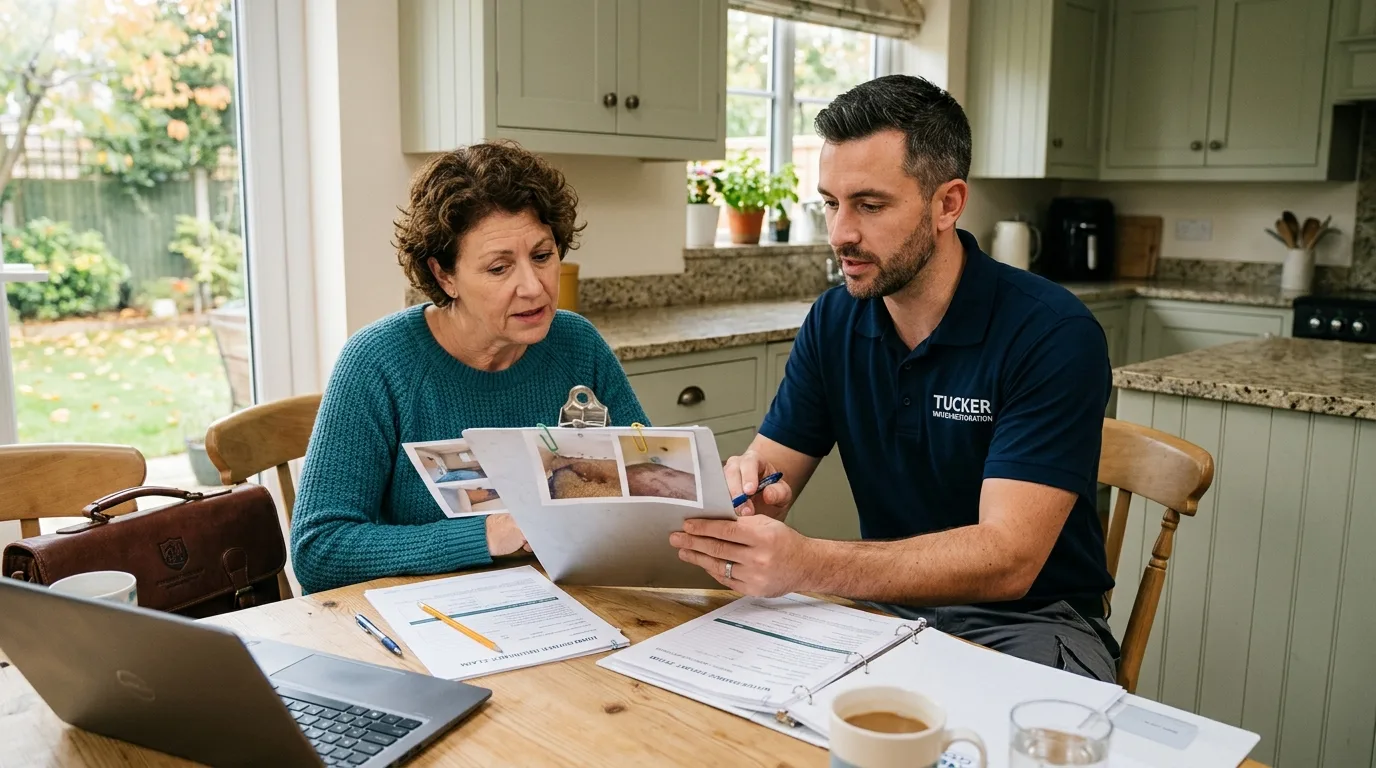
Water damage is the most frequently filed homeowner’s insurance claim in Georgia — and the insurance claim process is often as stressful as the water damage itself. Understanding how claims work, what documentation your insurer requires, and what coverage limitations apply to Brookhaven homeowners can be the difference between a fully paid claim and a disputed settlement that leaves you covering tens of thousands of dollars out of pocket.
In this post, we cover which types of water damage are covered in Georgia, the documentation requirements for a successful claim, common claim denial reasons, and how to work effectively with restoration contractors and adjusters in DeKalb County.
Water Damage in Brookhaven? We Work Directly With Your Insurance
Full documentation, direct billing, insurance-approved protocols. Call (877) 698-1311 for immediate help throughout DeKalb County.
What Types of Water Damage Are Covered by Homeowner’s Insurance in Georgia
Sudden and accidental water damage — the category that covers most residential water damage events — includes pipe bursts, appliance failures, roof leaks from storm damage, and HVAC condensate overflow. These events are characterized by water damage that happens quickly, without warning, and that the homeowner could not reasonably have prevented through maintenance. This category is covered under virtually all standard homeowner’s insurance policies in Georgia.
Gradual water damage is typically excluded. Insurance companies define gradual damage as water damage that developed over time from a slow leak or seepage that the homeowner knew about or should have known about. A supply line that has been leaking slowly for six months and caused damage to the subfloor and cabinet base is often denied on the basis that the homeowner should have detected and repaired it sooner. Documentation of regular home maintenance and prompt repair of known issues is the best protection against gradual damage exclusions.
Sewer backup and water backup require a specific endorsement that many Georgia homeowners don’t have. Standard policies exclude damage from water that backs up through drains, sewers, or sumps. The sewer backup endorsement costs $40–$70 per year and is strongly recommended for Brookhaven homeowners given the city’s aging sewer infrastructure and the flooding risk associated with combined sewer systems in some areas.
Flood damage — water that enters from outside the structure, including storm flooding, overland flow, and groundwater — is excluded from standard homeowner’s insurance policies and covered only through NFIP (National Flood Insurance Program) or private flood insurance. Brookhaven properties in FEMA-mapped flood zones along Peachtree Creek are required to carry flood insurance when they have federally-backed mortgages.
Mold resulting from covered water damage is typically covered as part of the water damage claim. Mold that develops from a gradual leak or that predates the covered event may be excluded or limited to lower sub-limits (often $5,000–$10,000) specified in the mold endorsement section of the policy.
The Documentation Every Brookhaven Water Damage Claim Needs
Photographs and video (pre-cleanup): Photographs and video documenting all affected areas before any water is extracted or materials removed. Date-stamped images showing standing water depth, affected wall heights, ceiling staining, and damaged belongings. These images cannot be recreated after cleanup — take them before anything is moved.
The restoration contractor’s detailed scope: A line-item estimate from your water damage restoration contractor showing square footage affected, materials removed, drying equipment used, and labor hours. This scope becomes the basis for your insurance adjuster’s scope of work — the more detailed it is, the fewer supplemental negotiations you’ll need.
Moisture logs: Daily moisture readings documented by the restoration team throughout the drying phase. These logs prove that professional drying was performed to industry standards and support the duration of equipment deployment in your claim.
Evidence of the damage source: Photos of the burst pipe, failed appliance hose, or storm damage entry point. Plumber invoices or repair documentation for the source. If the claim involves a storm-related roof leak, weather data showing the storm event is supportable documentation.
Personal property inventory: A list of all belongings that were damaged or destroyed, with values and documentation (receipts, model numbers, photos of items). Most policies have personal property coverage that compensates for damaged contents — this requires a separate inventory from the structural damage documentation.
Correspondence records: Keep records of all communication with your insurance company, including dates, contact names, and summaries of conversations. If your claim is later disputed, correspondence records demonstrate good-faith cooperation.
Free Insurance Documentation Assistance in Brookhaven
We help DeKalb County homeowners build strong insurance claims from day one. Call (877) 698-1311.
Common Reasons Water Damage Claims Are Denied in Georgia
Excluded water source: The most common denial reason — the damage source falls into an excluded category (gradual damage, sewer backup without endorsement, or flood). Review your policy language carefully with your agent before a claim, not after.
Maintenance failure: Insurers deny claims when they determine the homeowner knew about the condition that caused the damage and failed to repair it. Regular home maintenance records and prompt repair of reported issues are the best protection against this denial basis.
Mold sub-limit: Many policies have a separate, lower sub-limit for mold remediation — often $5,000–$10,000 — even when mold resulted from a covered water event. If your restoration requires significant mold remediation, understand your policy’s mold sub-limit before the project begins.
Inadequate documentation: Claims that lack pre-cleanup photos, moisture logs, or detailed contractor scopes are more likely to be underpaid because adjusters have less evidence to work from. Restoration contractors who provide thorough documentation packages produce better claim outcomes.
Delay in reporting or mitigation: Policies typically require prompt notification of damage and reasonable mitigation steps. Waiting days or weeks to report water damage, or failing to take steps to prevent further damage, can reduce or void coverage.
How to Work Effectively With a DeKalb County Insurance Adjuster
Insurance adjusters are not adversaries — they’re professionals working within the policy language to determine the covered scope of a claim. Understanding how to work effectively with them produces better outcomes than viewing the relationship as adversarial:
Authorize emergency mitigation early: Your policy’s “duty to mitigate” clause requires you to take reasonable steps to prevent further damage. Authorizing extraction and temporary drying equipment immediately doesn’t commit you to a specific repair scope — it fulfills your policy obligation and protects coverage.
Be present for the adjuster inspection: Schedule the adjuster inspection for a time when you can walk the property together. Point out all affected areas, including those that aren’t visually obvious (wall cavities, crawlspaces, ceiling assemblies). Your restoration contractor’s moisture mapping documentation should be available for this meeting.
Review the adjuster’s scope against your contractor’s scope: Adjusters sometimes miss items or use lower-cost line items. A detailed contractor scope submitted with your claim reduces these gaps. When discrepancies exist, they can be supplemented with supporting documentation — a process your contractor should understand.
Understand replacement cost vs. actual cash value: Replacement cost coverage pays the cost to replace damaged items with new equivalents; actual cash value coverage pays replacement cost minus depreciation. Understanding which your policy provides affects how you evaluate settlement offers.
Practical Preparation for Future Claims
- Annual policy review: Review your policy with your insurance agent annually, specifically checking for sewer backup endorsement, mold sub-limits, and flood coverage gap.
- Document regular maintenance: Keep records of plumbing inspections, roof maintenance, HVAC servicing, and appliance checks. These records support your case that damage was sudden, not the result of neglect.
- Know your water shutoff: The ability to shut off water immediately after a pipe burst prevents the kind of damage escalation that makes claims more complicated.
- Choose a documentation-focused restoration contractor: Working with a water damage restoration company that provides thorough moisture logs, photo documentation, and detailed scopes dramatically improves claim outcomes.
Frequently Asked Questions
Will filing a water damage claim raise my homeowner’s insurance rates in Georgia?
Filing a water damage claim may result in a premium increase at renewal, depending on your insurer, claim history, and Georgia market conditions. The decision to file should balance the claim amount against potential rate increases and your deductible. For significant water damage — typically $5,000+ — filing is almost always the right financial decision. For minor events close to your deductible amount, the cost-benefit calculation is less clear.
How long does a water damage insurance claim take to settle in DeKalb County?
From claim filing to settlement, most straightforward water damage claims in Brookhaven resolve within 3–6 weeks. Emergency mitigation is typically approved within 24–48 hours. The adjuster inspection usually occurs within 1–5 business days. Scope of work agreement and payment for completed work follows within 1–3 weeks after inspection. Complex claims with disputed scopes or mold supplementals take longer.
What if my claim is denied?
Georgia homeowners have the right to appeal denied claims, request a re-inspection, and engage public adjusters who advocate for policyholders in claim disputes. If a claim denial appears incorrect based on the policy language, written appeal with supporting documentation is the first step. Consulting a Georgia public adjuster or insurance attorney is appropriate for significant denied claims.
Brookhaven Water Damage — Insurance-Ready Documentation
We work directly with all major carriers and help DeKalb County homeowners navigate claims from start to finish. Call (877) 698-1311.
Related: