Burst Pipe Emergency in Brookhaven: What to Do Before Help Arrives
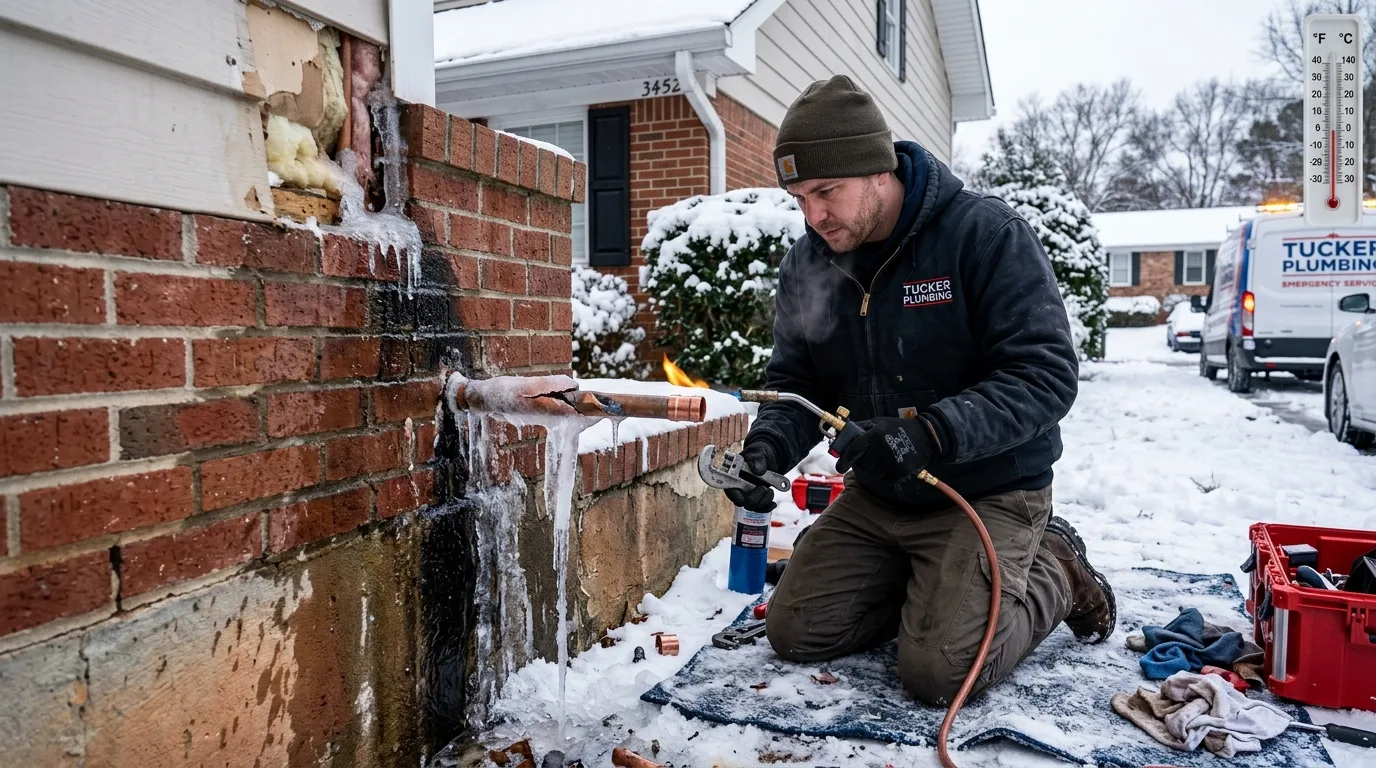
A burst pipe releases water at your home’s full supply pressure — typically 40–80 PSI — which means a major supply line can flood a room in minutes. In Brookhaven, where freeze-thaw pipe bursts peak in January and February, the difference between a $2,000 cleanup and a $20,000 restoration often comes down to how quickly a homeowner takes the right steps in the first ten minutes after discovery.
This post covers exactly what to do — in order — from the moment you discover a burst pipe in your Brookhaven home until the restoration team arrives.
Pipe Burst in Brookhaven? Call Us Right Now
24/7 emergency water extraction throughout DeKalb County. Call (877) 698-1311 — we respond immediately.
Why the First 10 Minutes Matter
Water from a burst supply line moves fast. At 40 PSI, a 3/4-inch supply line releases roughly 12 gallons per minute. That’s 720 gallons per hour — enough to fill a bathroom floor with several inches of standing water, saturate drywall to a height of 18+ inches, and begin seeping into subfloor materials within a single hour of undetected flow.
In Brookhaven’s humid climate, every hour of standing water increases mold risk exponentially. Water that enters wall cavities and is left for 24–48 hours creates conditions where mold remediation becomes a necessary part of the restoration rather than an optional precaution. The faster water is stopped and extraction begins, the lower the total restoration cost and the less invasive the intervention needs to be.
Step-by-Step Response for a Burst Pipe in Brookhaven
Step 1: Locate and shut off the main water supply. Your main shutoff valve is the single most important piece of knowledge for this emergency. In most Brookhaven homes, it’s located at one of three places: at the water meter near the street (typically in a ground-level box), in the basement or utility room on the supply line entering the home, or in a crawlspace on the main supply line. The valve is typically a ball valve (quarter-turn lever) or gate valve (multi-turn wheel). Close it completely. If you don’t know where your main shutoff is, call a plumber while water is still flowing.
Step 2: Turn off the water heater. With the main supply shut off, your water heater will not refill. Running a water heater without water can damage the heating element or cause the tank to overheat. Shut off gas water heaters at the gas valve; shut off electric water heaters at the breaker.
Step 3: Open faucets to relieve pressure and drain lines. Open cold water faucets at multiple points in the home — kitchen, bathrooms, hose bibs. This relieves pressure in the supply system and helps drain water remaining in lines above the burst location, reducing the volume of water that continues to drip even after the main is shut off.
Step 4: Shut off electricity to affected areas. If water has reached areas near electrical outlets, panels, or light fixtures, shut off power to those circuits at the breaker box. Water and electricity in combination are a serious safety hazard. If there’s any question about whether water has reached electrical systems, shut off power to all affected floors at the main breaker.
Step 5: Document with photos and video. Before removing any water or moving any belongings, document the affected areas with photos and video. Capture standing water levels, all affected walls and floors, and any belongings that have been damaged. Date-stamp your photos if possible. This documentation is the foundation of your insurance claim.
Step 6: Call a water damage restoration professional. Call Brookhaven Water Damage Restoration at (877) 698-1311 immediately. Professional extraction equipment removes water volumes that household wet-vacs cannot manage efficiently, and commercial dehumidifiers begin drawing moisture from structural materials within the first hours — the critical window for preventing mold in Brookhaven’s humid climate.
Step 7: Call a licensed plumber. The burst pipe must be located and repaired before water service can be restored. Coordinate the plumber and restoration team so both can begin work as quickly as possible — the plumber repairs the pipe while the restoration team begins extraction and material assessment.
Step 8: Call your homeowner’s insurance. Report the claim and get a claim number before authorizing any restoration work beyond emergency mitigation. Standard homeowner’s policies cover sudden and accidental pipe burst damage — document everything and cooperate with the adjuster’s inspection process.
Brookhaven Pipe Burst Response — Don't Wait on the Call
Every hour of delay increases restoration cost. IICRC certified extraction serving all of DeKalb County. Call (877) 698-1311.
What NOT to Do After a Pipe Burst
Don’t run ceiling fans or box fans without guidance. Fan placement is a technical decision in water damage situations — improper airflow can spread contaminated moisture to clean areas, cause wet drywall to fail structurally, and in some cases extend total drying time by creating conditions that pull moisture from walls into the air faster than the space can exhaust it. Let your restoration team determine fan placement and type.
Don’t use a household vacuum to extract water. Shop-vacs and wet-vacs are useful for small spills but are not designed for the volume of water a pipe burst releases. Using them when professional extraction equipment is available only delays the professional start and exhausts you before the actual restoration work begins.
Don’t delay insurance documentation. Every piece of documentation adds evidence strength to your claim. If you move belongings, throw away materials, or dry surfaces before documenting them, you reduce the evidence supporting your claim. Document first, act second.
Don’t ignore ceiling water. Water that has entered ceiling assemblies from a burst pipe above creates significant structural and mold risk — ceiling drywall that becomes saturated can fail and collapse, and insulation above the ceiling holds water like a sponge. If you see ceiling staining, sagging, or active dripping, treat it as high priority for the restoration team.
Practical Safety Checklist Before Help Arrives
- Main water supply: Shut off completely
- Water heater: Shut down at valve or breaker
- Affected circuit breakers: Off if water near electrical
- Photos/video: Completed of all affected areas before any cleanup
- Belongings at risk: Moved to dry areas if safe to do so without documentation loss
- Standing water safety: Don’t walk in water that may have contacted electrical systems
- Pets: Moved away from affected areas
Frequently Asked Questions
How long can I wait before calling a water damage restoration company after a pipe burst?
The answer for Brookhaven homeowners is: don’t wait at all. Call within the first hour of discovery. In Georgia’s humid climate, the window for preventing mold formation starts closing within 24 hours of water exposure at warm temperatures. Structural materials that are wet for more than 48 hours in Brookhaven’s summer conditions will almost certainly develop mold. Even in winter, when temperatures are lower and mold development is slower, water sitting in wall cavities for more than 2–3 days creates structural deterioration that adds significant cost to the restoration scope.
What if the pipe burst occurred while I was away from home?
If you return to discover water damage that’s been sitting for hours or days, the approach doesn’t change — shut off the water supply, document everything, and call (877) 698-1311 immediately. The restoration scope will be larger because more materials have been saturated, but the process remains the same. Water damage restoration professionals adjust their equipment deployment and material removal decisions based on how long water has been present — this affects cost, but not the ability to restore the property to pre-loss condition.
Does shutting off the main water immediately limit water damage significantly?
Yes — dramatically. A pipe that flows for 10 minutes at 40 PSI releases roughly 120 gallons. The same pipe flowing for an hour releases 720 gallons. The difference in affected area, structural saturation, and material damage between 10 minutes of flow and 60 minutes of flow is substantial. Every minute spent locating the shutoff valve while water flows freely is expensive. Know where your main shutoff is before you need it.
Burst Pipe Cleanup in Brookhaven — IICRC Certified, Available 24/7
Call Brookhaven Water Damage Restoration at (877) 698-1311 for immediate emergency response throughout DeKalb County.
Related: