Crawlspace Water Damage in Brookhaven: Red Clay + Old Homes
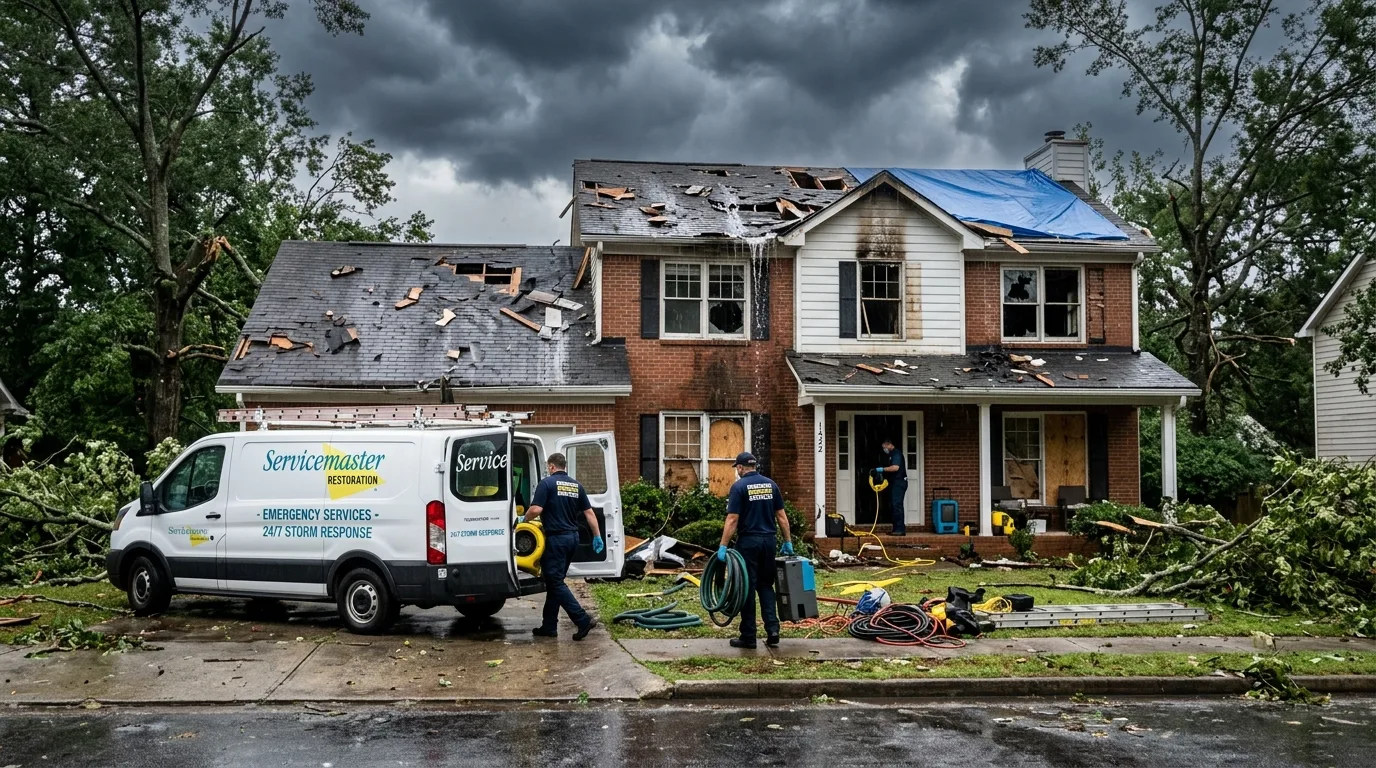
Crawlspace water damage is the most underdiagnosed form of water damage in Brookhaven, GA. While basement flooding and burst pipes are immediately visible, crawlspace moisture accumulates silently — rotting floor joists, feeding mold colonies on subfloor sheathing, and raising indoor relative humidity to uncomfortable levels throughout the home above — often for months or years before a homeowner notices any symptoms.
In this post, we cover why Brookhaven’s red clay soil and older housing stock create the perfect conditions for crawlspace moisture damage, the warning signs to watch for, and what professional crawlspace drying and encapsulation involve.
Crawlspace Moisture in Your Brookhaven Home?
Free professional assessment including moisture mapping. Call (877) 698-1311 — serving all of DeKalb County.
Why Crawlspace Water Damage Is a Brookhaven-Specific Problem
Brookhaven’s crawlspace moisture challenge stems from the intersection of two factors: Georgia red clay soil and construction practices that were standard through the 1970s.
Most homes built in Brookhaven before 1980 — which includes large portions of the Ashford Park, Drew Valley, and Brookhaven Village neighborhoods — have vented crawlspaces with dirt floors. This design was based on the assumption that airflow through vent openings would carry moisture out of the crawlspace before it could accumulate. In drier climates, this works reasonably well. In Georgia’s humid climate, it’s fundamentally flawed: the outdoor air that enters through crawlspace vents during Brookhaven’s summers carries more moisture than the air inside the crawlspace. Opening vents to “ventilate” the crawlspace actually introduces additional moisture in summer rather than removing it.
Georgia red clay soil compounds the problem at the source level. Unlike sandy or loamy soils that dry quickly after rain, red clay holds moisture at high saturation levels for days after each rain event. This moisture continuously evaporates upward through the crawlspace floor into the crawlspace air — a process called soil moisture vapor transmission that continues 24 hours a day regardless of whether it’s raining. A 1,000-square-foot crawlspace over red clay soil in Brookhaven can transmit several gallons of moisture vapor per day into the crawlspace air, raising relative humidity to 80–95% consistently during summer months.
At relative humidity above 70%, mold growth on organic materials — wood framing, subfloor sheathing, cardboard, stored paper products — is virtually guaranteed within weeks. Floor joists exposed to chronic high humidity begin absorbing moisture, swelling, and developing early-stage fungal decay within months of sustained high-humidity exposure.
Warning Signs of Crawlspace Water Damage in Brookhaven
Musty odors in the home: The most common first symptom. Musty or earthy smells that rise through floors — especially hardwood floors with gaps — originate in the crawlspace and indicate active mold growth on wood framing or subfloor materials below.
Springy or soft floors: Floor joists and subfloor sheathing that have absorbed chronic moisture lose stiffness. A floor that deflects perceptibly when you walk across it, or has a soft spot near the center of a span, indicates structural moisture damage in the framing below.
Increased interior humidity: A wet crawlspace raises relative humidity throughout the first floor of the home. If your home feels persistently damp or clammy despite running air conditioning, crawlspace moisture is a likely contributor.
Visible condensation on ductwork or pipes: HVAC ducts and plumbing pipes that run through a humid crawlspace often show condensation in summer — a sign that crawlspace air is significantly warmer and more humid than the surfaces it contacts.
Higher cooling bills: A wet crawlspace acts as an evaporative cooler in reverse — moisture evaporating from soil and wet wood absorbs heat energy that your air conditioning must then replace, increasing energy consumption.
Peeling exterior paint: Moisture vapor that migrates from a wet crawlspace upward through wall cavities can cause exterior paint to blister and peel — a secondary symptom that often appears before more dramatic structural symptoms develop.
Suspected Crawlspace Damage in Brookhaven? We'll Check It Free
Moisture mapping, thermal imaging, and honest assessment. Serving Brookhaven and DeKalb County. Call (877) 698-1311.
How Crawlspace Drying and Encapsulation Work
Professional crawlspace remediation for a Brookhaven home with moisture damage involves several phases:
Phase 1 — Assessment: Moisture meter readings on floor joists and subfloor sheathing establish damage extent. Infrared thermal imaging identifies wet insulation, areas of active water intrusion, and zones where moisture is highest. The source of moisture entry (soil vapor transmission, foundation wall seepage, or specific intrusion point) is documented before any remediation work begins.
Phase 2 — Mold remediation (when present): Wood framing and subfloor sheathing with mold growth are treated by HEPA vacuuming and application of EPA-registered antimicrobials. Heavily damaged materials are removed and replaced before drying begins.
Phase 3 — Active drying: Commercial dehumidifiers and air movers placed in the crawlspace begin reducing moisture in structural wood and soil. In Brookhaven’s clay soil environment, this phase takes 3–7 days because red clay releases moisture slowly and requires sustained dehumidification to drop wood moisture content to acceptable ranges.
Phase 4 — Vapor barrier installation or encapsulation: A ground cover vapor barrier — 6 to 20-mil polyethylene sheeting — is installed over the crawlspace floor, lapped up foundation walls and mechanically fastened. This physical barrier interrupts soil moisture transmission at the source. Full encapsulation goes further: the entire crawlspace, including walls, rim joists, and sometimes ceiling, is sealed with reinforced polyethylene, creating a conditioned space that maintains stable humidity year-round.
Phase 5 — Drainage improvements (when needed): For crawlspaces where water intrusion occurs through foundation walls or floor-wall joints rather than soil vapor only, interior drainage systems direct water to a sump pit and pump before it can accumulate.
Practical Crawlspace Maintenance for Brookhaven Homeowners
- Annual inspection: Have a professional assess crawlspace moisture levels at least once per year — ideally in late spring, after winter rains and before summer humidity peaks.
- Maintain vapor barrier integrity: Vapor barriers in Brookhaven crawlspaces should be inspected for tears, displacement, or areas where water has pooled on top of the sheeting. Repair tears immediately.
- Ensure sump pump operation: If your crawlspace has a sump pump, test it quarterly by pouring water into the pit and confirming the pump activates and discharges properly.
- Monitor for pest activity: Subterranean termites are attracted to moist wood — increased termite activity around a Brookhaven home’s perimeter is sometimes the first indicator of elevated crawlspace moisture.
- Don’t store organic materials in crawlspaces: Cardboard boxes, wood scraps, and paper products stored in crawlspaces provide ideal mold growth substrate in high-humidity conditions. Keep crawlspaces clear of organic debris.
Frequently Asked Questions
Is crawlspace encapsulation worth the cost in Brookhaven?
For Brookhaven homes with vented crawlspaces over red clay soil — which describes the majority of pre-1980 homes in the area — crawlspace encapsulation typically delivers positive returns within 2–5 years through reduced energy costs, improved indoor air quality, lower HVAC maintenance costs, and prevented structural repair costs. A full encapsulation system that costs $4,000–$8,000 prevents the $10,000–$30,000 floor joist replacement and mold remediation scenario that untreated moisture damage eventually produces in Georgia’s climate.
Can I install a vapor barrier myself in my Brookhaven crawlspace?
Basic vapor barrier installation — laying polyethylene sheeting over a dry crawlspace floor — is a DIY project for homeowners comfortable in confined spaces. However, crawlspaces with active moisture intrusion, existing mold, or structural damage require professional remediation before any vapor barrier is installed. Installing a vapor barrier over a wet crawlspace seals moisture in rather than out. Professional assessment ensures the crawlspace is in condition for barrier installation to deliver the intended benefit.
How does crawlspace moisture affect indoor air quality?
Crawlspace air enters the living space above through subfloor penetrations, HVAC returns, and electrical chases — and it carries whatever is in it, including mold spores, bacteria, and VOCs from decaying wood. Homes with active crawlspace mold have measurably higher indoor mold spore counts than those with dry crawlspaces. For Brookhaven homeowners — particularly those in Lenox Park and Brookhaven Village where older construction is most common — crawlspace moisture management is a direct health benefit for occupants.
Fix Crawlspace Moisture in Brookhaven for Good
Professional crawlspace drying and encapsulation serving Brookhaven, Decatur, Tucker, and all of DeKalb County. Call (877) 698-1311.
Related: