How to Choose a Water Damage Contractor in Brookhaven, GA
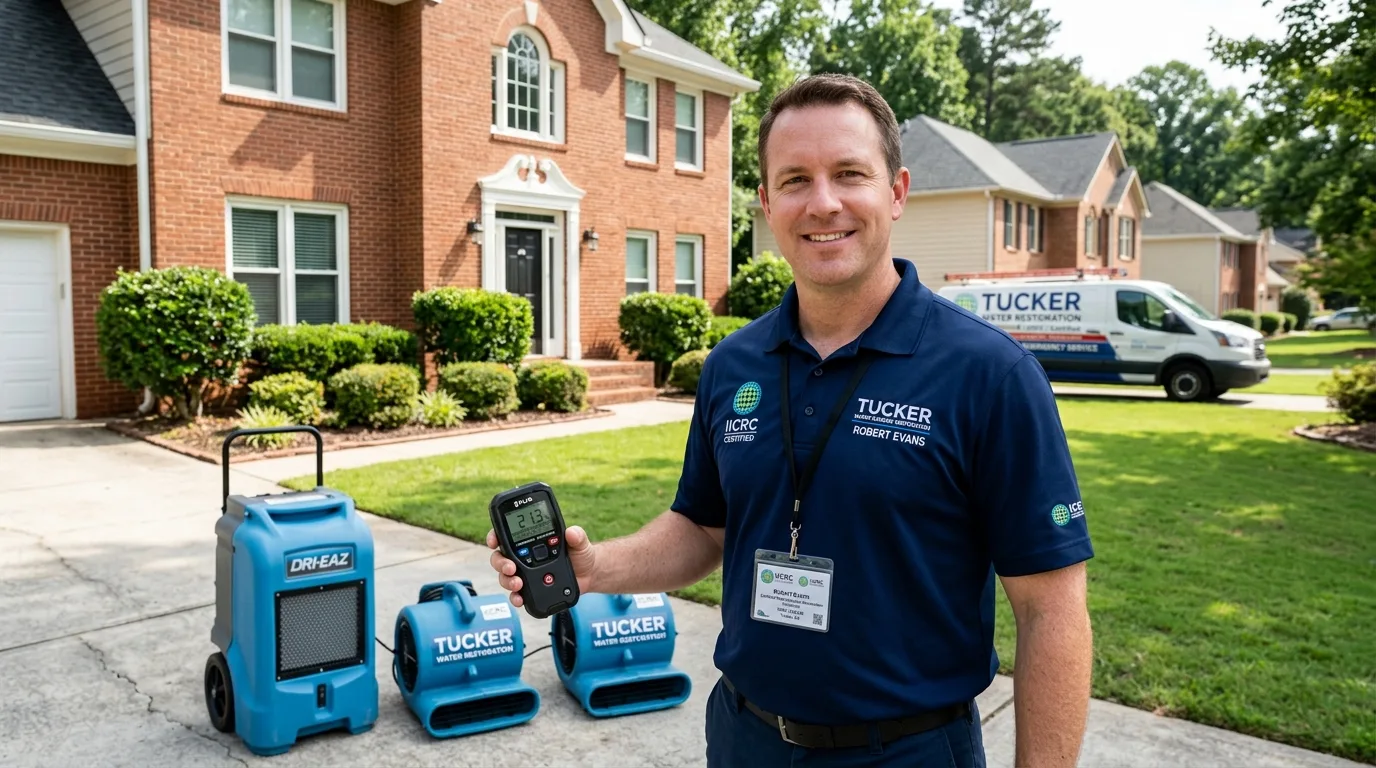
Water damage restoration is one of the few home services where the quality difference between contractors has immediate, measurable consequences — not in years, but in days. A contractor who deploys inadequate drying equipment, skips moisture documentation, or mis-classifies water category in a Brookhaven home during summer can produce a mold contamination scenario within a week that costs more to remediate than the original water damage itself.
Choosing the right water damage restoration contractor in Brookhaven requires asking specific questions before you commit — especially in an emergency when the pressure to make a fast decision is highest.
In this post, we cover the credentials to look for, questions to ask every contractor, red flags to avoid, and what a proper restoration contract should include for Brookhaven and DeKalb County homeowners.
Questions About Water Damage Restoration in Brookhaven?
We welcome every question — transparent answers are how we earn trust. Call (877) 698-1311 or contact us online.
Why Contractor Selection Matters More in Brookhaven Than in Drier Markets
Water damage restoration in Georgia’s humid climate is technically more demanding than the same work in Arizona or Colorado. Brookhaven’s 50+ inches of annual rainfall and summer humidity mean that achieving dry standard — the moisture content targets specified by IICRC S500 — requires more dehumidification capacity, more time, and more careful monitoring than restoration in a dry climate.
Contractors who are adequately equipped for drier markets may be under-equipped for Brookhaven. A contractor who deploys two consumer-grade dehumidifiers in a 1,000 sq ft basement flooding event in Brookhaven will achieve incomplete drying. The basement will feel dry to the touch and moisture meters may show acceptable surface readings — while wall cavities and subfloor materials remain elevated and mold conditions develop in the following weeks. The homeowner won’t know until they smell musty odors or find mold during a renovation months later.
Step 1: Verify IICRC Certification
IICRC (Institute of Inspection, Cleaning and Restoration Certification) is the global standard-setting body for the water damage restoration industry. The IICRC S500 standard for water damage restoration and S520 standard for mold remediation establish equipment requirements, drying protocols, and documentation standards that separate professional restoration from unqualified work.
Ask every contractor for their IICRC certification numbers and verify them on the IICRC website. Ask specifically:
- Is each technician individually certified, or only the company?
- Are technicians certified to S500 water damage and S520 mold remediation?
- When was the certification last renewed?
IICRC certifications require continuing education and renewal — not just a one-time test. A contractor with current, individually-certified technicians represents a genuine quality standard.
Step 2: Assess Equipment Capacity for Brookhaven’s Climate
Ask about the specific equipment the contractor will deploy:
- What brand and model of dehumidifiers do you use? (Commercial refrigerant units vs. consumer-grade — not the same)
- How many dehumidifiers will you deploy for an event of this scope?
- Do you use truck-mounted extraction or portable units? (Truck-mounted is higher capacity for large volumes)
- Do you have thermal imaging cameras for moisture mapping?
- Do you use moisture meters to document drying progress daily?
A contractor who can’t answer these questions specifically — or who says “we’ll bring what we need” without defining what that is — doesn’t have a systematic drying approach.
Step 3: Confirm Insurance Coordination Capability
Working with homeowner’s insurance reduces out-of-pocket costs significantly for covered water damage events. The question isn’t whether the contractor accepts insurance — it’s whether they provide the specific documentation that insurance carriers require for a complete claim:
- Detailed scope of work: Line-item scope showing square footage, materials removed, equipment deployed, and labor hours.
- Daily moisture logs: Timestamped moisture readings from multiple structural measurement points throughout the drying phase.
- Photo documentation: Before, during, and after photos covering all affected areas.
- Contents inventory: Documentation of personal property damage if applicable.
Ask contractors whether they handle direct billing to insurance carriers or require you to manage payment and reimbursement. The best contractors in Brookhaven — and across neighboring Chamblee and Sandy Springs — handle direct billing as a standard service.
Brookhaven Water Damage Restoration — Transparent, Certified, Insured
We provide complete insurance documentation and honest answers. Call (877) 698-1311 for a free assessment.
Step 4: Verify Georgia Contractor Licensing
Water damage restoration that includes reconstruction — replacing drywall, flooring, ceilings, or structural components — requires a Georgia contractor’s license. Ask for the license number and verify it with the Georgia Secretary of State’s Corporations Division. For work involving only extraction, drying, and remediation (no reconstruction), licensing requirements vary by scope — ask the contractor to clarify what license applies to the specific work in your situation.
Georgia’s contractor licensing requirements protect homeowners from unlicensed operators who perform structural work without the training and insurance that licensed contractors carry. Verification takes less than five minutes and is worth doing before any significant work authorization.
Red Flags to Avoid When Choosing a Contractor in Brookhaven
Door-to-door solicitation after storm events: Legitimate water damage restoration companies don’t send representatives to knock on doors after storms, promising discounts for immediate commitment. These are often out-of-state companies with no local accountability.
No written estimate or scope of work: Professional restoration companies provide written estimates documenting what work will be performed, what materials will be removed, and what equipment will be deployed. Verbal-only estimates with vague scopes should disqualify a contractor from consideration.
No moisture documentation: A contractor who cannot explain how they document drying progress — specifically through moisture meter readings at multiple structural points — is not performing restoration to IICRC standards.
“Done in one day” claims: Professional water damage drying in Brookhaven’s climate takes 3–7 days for the extraction and drying phase alone. A contractor who promises to complete restoration in a single day is either misrepresenting the scope or not completing actual drying — they’re removing visible water and leaving structural materials wet.
Requiring large upfront payment: A reasonable deposit (10–25%) before emergency work begins is standard. Contractors requiring 50%+ upfront before work starts, or requiring full payment before work is complete, are operating outside professional norms.
No local verifiable address or reference: Contractors with only a P.O. box, no physical location, or no verifiable local references are difficult to hold accountable if work is incomplete or disputes arise. Ask for references from recent projects in the Brookhaven or DeKalb County area.
Questions to Ask Every Water Damage Contractor in Brookhaven
- Are your technicians individually IICRC-certified? Can I verify your certification numbers?
- What dehumidifiers will you deploy, and how many for this scope?
- How will you document moisture readings throughout the drying process?
- Do you work directly with homeowner’s insurance, or do I manage reimbursement?
- Do you have a Georgia contractor’s license for any reconstruction work?
- What is your response time from my call to arrival on-site?
- Can you provide references from recent projects in Brookhaven or DeKalb County?
- What does your written scope of work include for this event?
- How will you determine when drying is complete?
- Do you carry liability and workers’ compensation insurance?
What a Professional Restoration Contract Should Include
Before authorizing work beyond emergency mitigation, a written contract should specify:
- Scope of work: Specific tasks, materials, equipment, and areas covered.
- Water category: Classification of the water type and corresponding protocols.
- Timeline: Estimated duration for drying phase and any reconstruction.
- Payment schedule: Deposit amount, payment milestones, and total cost or cost range.
- Insurance billing: Whether contractor bills insurance directly or provides documentation for homeowner reimbursement.
- Warranty: Any warranty on work performed.
- Documentation deliverables: Moisture logs, photos, and clearance report provided at project end.
Frequently Asked Questions
How do I find a reputable water damage contractor in Brookhaven quickly during an emergency?
In a water emergency, you have limited time for research. The most reliable shortcuts: (1) call a company with verified IICRC certification — you can search by company on the IICRC website at any time, (2) check for Google reviews with specific mentions of documentation, insurance coordination, and drying quality, (3) ask your homeowner’s insurance company for their preferred vendor list — these vendors meet insurer documentation standards. For immediate response in Brookhaven and DeKalb County, call Brookhaven Water Damage Restoration at (877) 698-1311.
Should I get multiple estimates for water damage restoration?
In a significant emergency, getting multiple estimates before authorizing work delays the critical early response window. For non-emergency situations — discovering an old water stain or assessing crawlspace moisture — getting two or three estimates is appropriate. For active water damage events, authorize emergency mitigation with a qualified contractor immediately and evaluate the full scope estimate for reconstruction work separately.
What happens if my contractor does incomplete work and mold develops afterward?
If a contractor performs incomplete drying and mold develops as a result, documenting the contractor’s work and your subsequent mold remediation costs creates the basis for a dispute. Requesting their moisture logs (if they kept them) and obtaining an independent assessment from another IICRC-certified firm establishes the quality gap. Disputes with unlicensed contractors or those without proper insurance can be filed with the Georgia Secretary of State and the Better Business Bureau. Working with licensed, certified, insured contractors from the start avoids this scenario.
Brookhaven Water Damage Restoration — Accountable, Certified, Local
IICRC certified, fully insured, direct insurance billing. We welcome your questions. Call (877) 698-1311 for a free Brookhaven assessment.
Related: